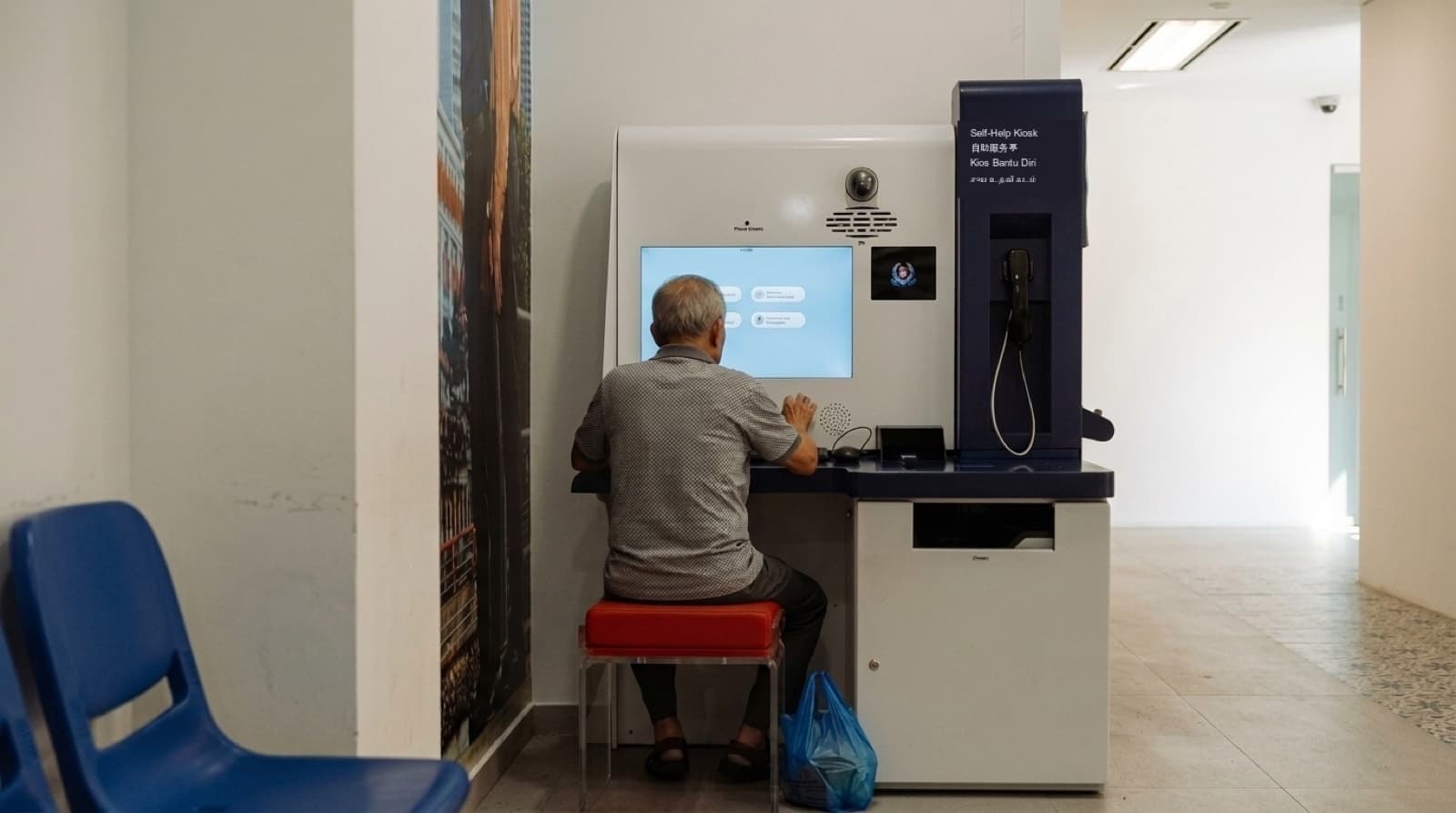
Emergency Video System: live video from the emergency call.
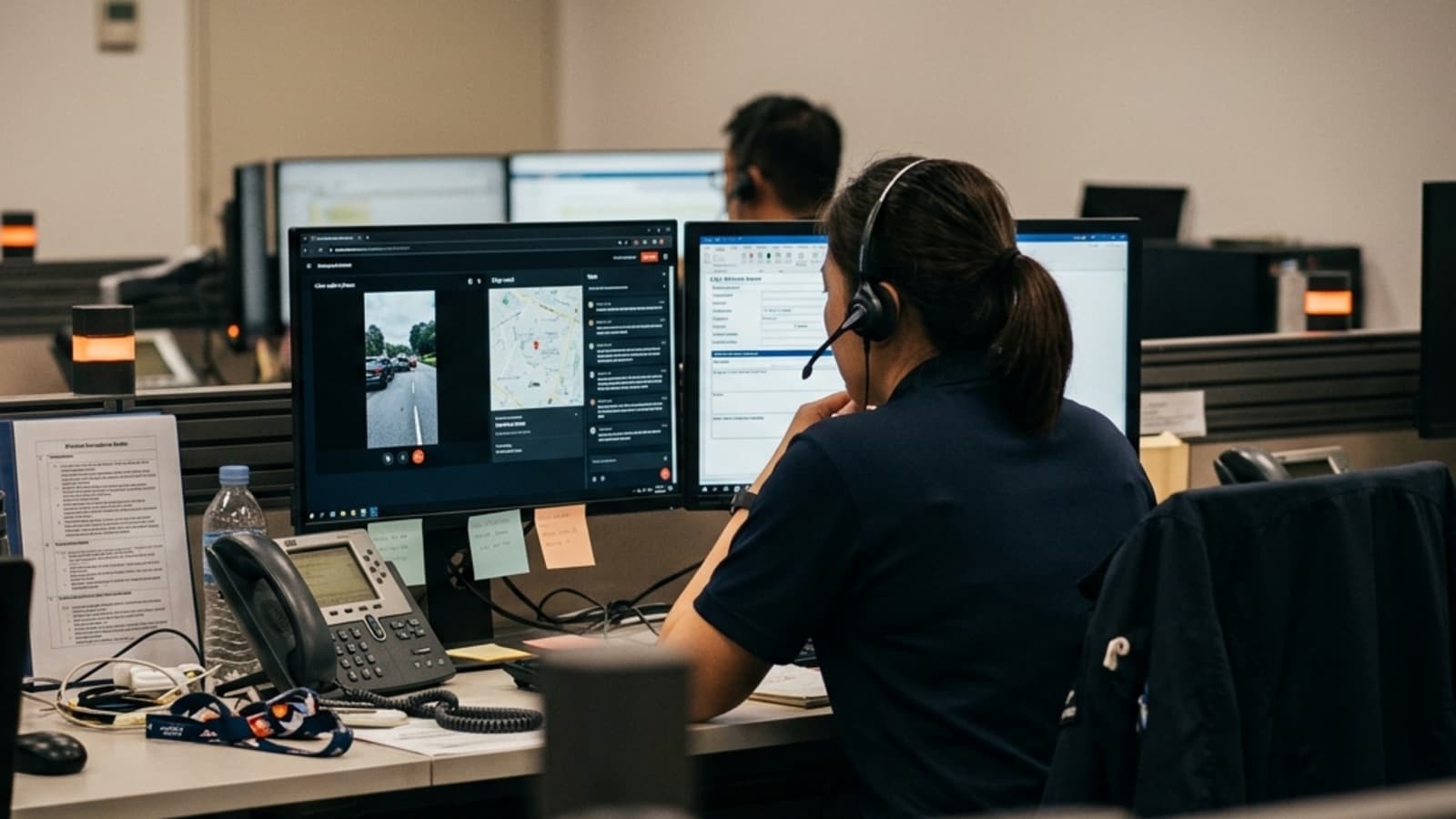
Developed with HTX, EVS lets SPF and SCDF Operations Centres obtain rich incident information from a live video stream that a short voice call can't carry.
- Tech
- Live video collaboration
- Deploy
- Emergency response
SPF and SCDF Operations Centres receive hundreds of emergency calls a day. For years the only channel between caller and operator was voice, which carries intent but not much of the scene. HTX saw mobile phones as the opening: nearly every caller already has a capable, geolocated video device in their hand. The question was how to use it without asking the caller to install anything, surrender credentials, or fight with an app during a crisis.
Emergency responders historically relied on voice calls alone for situational awareness. Operators lacked the visual context that would let them triage and direct resources accurately, and every second of that gap matters.
- The caller dials the police or SCDF emergency line as normal. Only when the operator deems it necessary and secure will EVS be initiated.
- Send the caller an SMS from the agency's official sender ID with a browser link, no credentials, no personal data, no app install (Chrome, Safari 11+, Android 7+, iOS 11+).
- Layer on-video annotations, multi-party live messaging, and caller location and movement tracking directly into the operator's surface.
- Record every session with time-synced playback of video, location and messages, reviewable for investigation and for training on repeatable situations.
EVS is a five-step call-to-archive flow. The voice call is primary; video is a deliberate, operator-triggered escalation. Each step is lightweight by design, the caller only ever opens an SMS link in a browser, and the session archives itself for post-incident review.
- 01CallCaller dials the SPF or SCDF emergency line. Call handled as normal.
- 02AssessOperator judges necessity and caller safety before initiating video.
- 03SMS linkOperator sends an SMS from the agency's official sender ID. No app, no credentials.
- 04Live sessionBrowser video with annotations, multi-party chat, GPS and movement tracking.
- 05ArchiveTime-synced playback of video, location and messages, for review and training.
- Built and trialled with HTX operators and domain specialists before any agency rollout.
- Deployed into the SPF Operations Centre first to validate the activation flow end to end.
- Extended to SCDF, with operator training on when (and when not) to escalate to video.
- Ongoing: playbacks feed back into operator training to improve response on repeatable incident types.
Operators now have visual context from the scene while the caller is still on the line, before responders arrive. Every session also becomes a record that feeds training for the next one.
Tell us what you're trying to solve.
Most engagements start with a specific problem: a scope, a spec, an integration that has stalled. Bring us that.
Other deployments.

Cloud Video Exchange: a unified video platform for Singapore's government agencies.
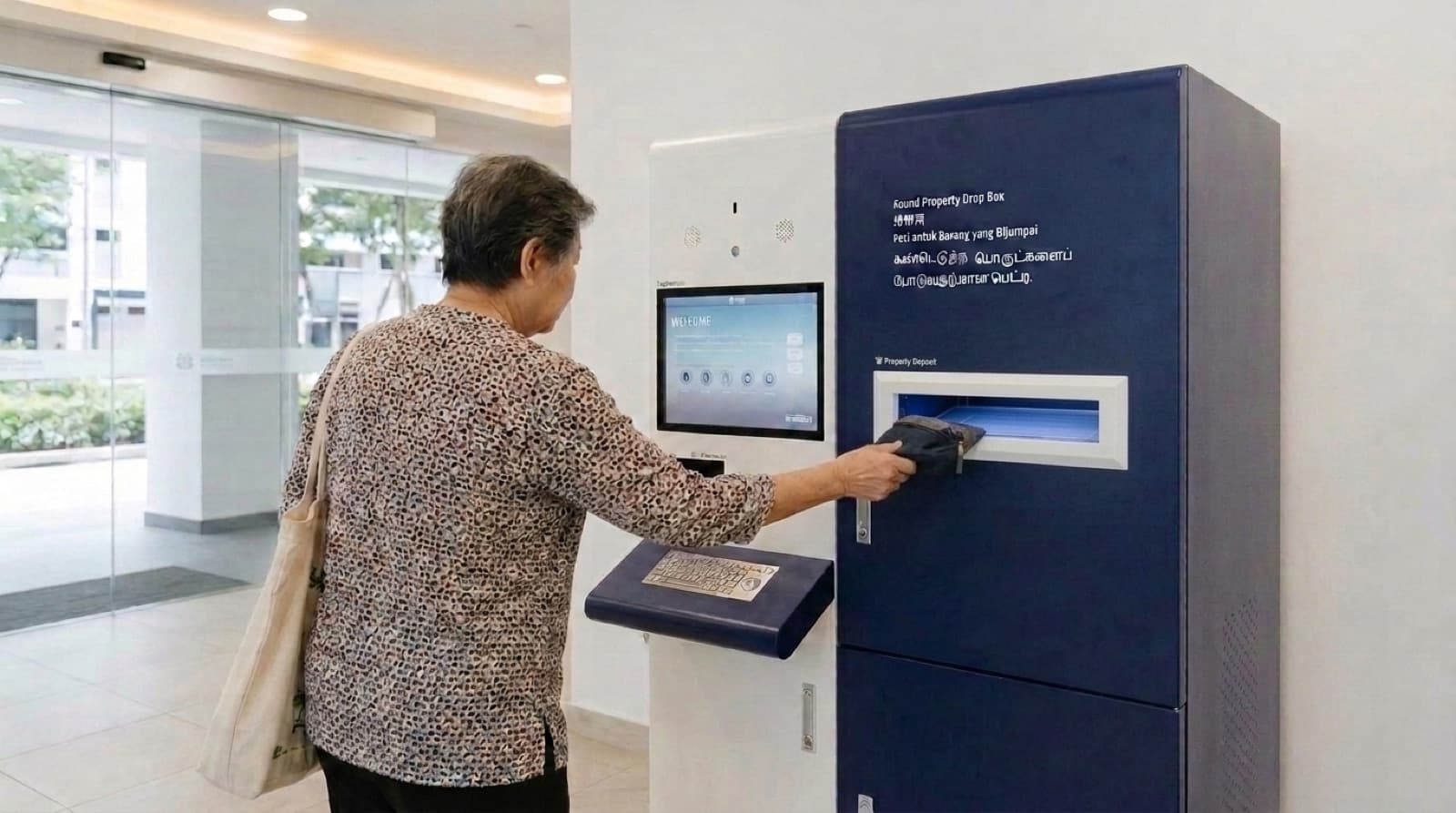
Found Property Dropbox: an automated lost-and-found kiosk for SPF.